SMOKELESS POWDER PROPERTIES AND STORAGE

S A A M I

SPORTING ARMS AND AMMUNITION MANUFACTURERS' INSTITUTE, INC. 555 DANBURY RD. WILTON, CT 06897


Ammunition handloading has become increasingly popular in recent years. This article discusses properties of smokeless powder and offers recommendations for its storage.

This article is intended to increase the knowledge of all concerned individuals and groups regarding smokeless powder. The statements and recommendations made are not intended to supersede local, state or Federal regulations. Proper authorities should be consulted on regulations for storage and use of smokeless powder in each specific community. A second leaflet entitled "SPORTING AMMUNITION PRIMERS: PROPERTIES, HANDLING & STORAGE FOR HANDLOADING" supplements this leaflet on smokeless powder.

PROPERTIES OF SMOKELESS POWDER

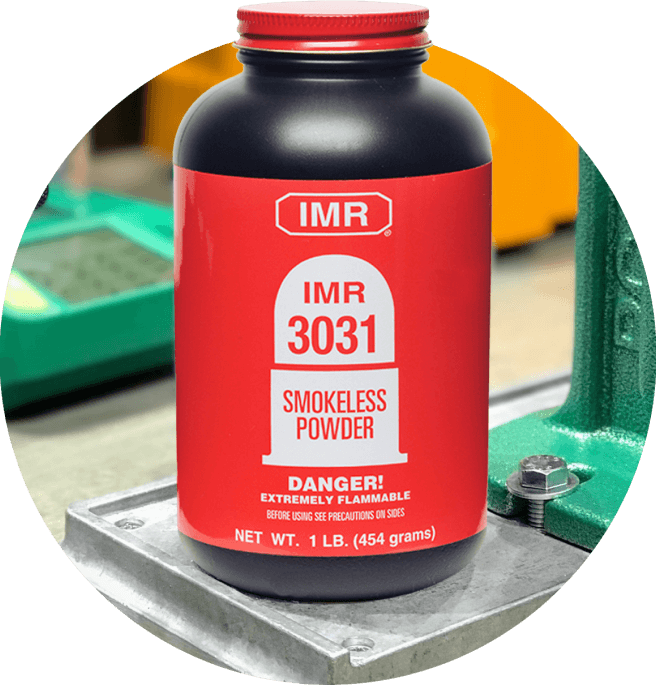
Smokeless powders, or propellants, are essentially mixtures of chemicals designed to burn under controlled conditions at the proper rate to propel a projectile from a gun. Smokeless powders are made in three forms:

1. Thin, circular flakes or wafers
2. Small cylinders
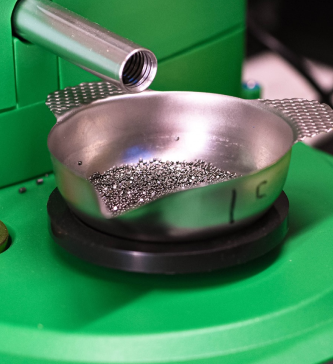
3. Small spheres

Single-base smokeless powders derive their main source of energy from nitrocellulose. The energy released from double-base smokeless powders is derived from both nitrocellulose and nitroglycerin.

All smokeless powders are extremely flammable; by design, they are intended to burn rapidly and vigorously when ignited.

Oxygen from the air is not necessary for the combustion of smokeless powders since they contain sufficient built-in oxygen to burn completely, even in an enclosed space such as the chamber of a firearm.

In effect, ignition occurs when the powder granules are heated above their ignition temperature. This can occur by exposing powder to:

1. A flame such as a match or primer flash.
2. An electrical spark or the sparks from welding, grinding, etc.
3. Heat from an electric hot plate or a fire directed against or near a closed container even if the powder itself is not exposed to the flame. When smokeless powder burns, a great deal of gas at high temperature is formed. If the powder is confined, this gas will create pressure in the surrounding structure. The rate of gas generation is such, however, that the pressure can be kept at a low level if sufficient space is available, or if the gas can escape.

In this respect smokeless powder differs from blasting agents or high explosives such as dynamite or blasting gelatin, although smokeless powder may contain chemical ingredients common to some of these products.

High explosives such as dynamite are made to detonate, that is, to change from solid state to gaseous state with evolution of intense heat at such a rapid rate that shock waves are propagated through any medium in contact with them. Such shock waves exert pressure on anything they contact, and, as a matter of practical consideration, it is almost impossible to satisfactorily vent away the effects of a detonation involving any appreciable quantity of dynamite.

Smokeless powder differs considerably in its burning characteristics from common "black powder."

Black powder burns essentially at the same rate out in the open (unconfined) as when in a gun. When ignited in an unconfined state, smokeless powder burns inefficiently with an orange-colored flame. It produces a considerable amount of light brown noxious smelling smoke. It leaves a residue of ash and partially burned powder. The flame is hot enough to cause severe burns.

The opposite is true when it burns under pressure as in a cartridge fired in a gun. Then it produces very little smoke, a small glow, and leaves very little or no residue. The burning rate of smokeless powder increases with increased pressure.

If burning smokeless powder is confined, gas pressure will rise and eventually can cause the container to burst. Under such circumstances, the bursting of a strong container creates effects similar to an explosion.

For this reason, the Department of Transportation (formerly Interstate Commerce Commission) sets specifications for shipping containers for propellants and requires tests of loaded containers - under actual fire conditions - before approving them for use. When smokeless powder in D.O.T.-approved containers is ignited during such tests, container seams split open or lids pop off - to release gases and powder from confinement at low pressure.

HOW TO CHECK SMOKELESS POWDER FOR DETERIORATION

Although modern smokeless powders are basically free from deterioration under proper storage conditions, safe practices require a recognition of the signs of deterioration and its possible effects.

Powder deterioration can be checked by opening the cap on the container and smelling the contents. Powder undergoing deterioration has an irritating acidic odor. (Don't confuse this with common solvent odors such as alcohol, ether and acetone.)

Check to make certain that powder is not exposed to extreme heat as this may cause deterioration. Such exposure produces an acidity which accelerates further reaction and has been known, because of the heat generated by the reaction, to cause spontaneous combustion. Never salvage powder from old cartridges and do not attempt to blend salvaged powder with new powder. Don't accumulate old powder stocks.

The best way to dispose of deteriorated smokeless powder is to burn it out in the open at an isolated location in small shallow piles (not over 1" deep). The quantity burned in any one pile should never exceed one pound. Use an ignition train of slow burning combustible material so that the person may retreat to a safe distance before powder is ignited.

CONSIDERATIONS FOR STORAGE OF SMOKELESS POWDER

Smokeless powder is intended to function by burning, so it must be protected against accidental exposure to flame, sparks or high temperatures.

For these reasons, it is desirable that storage enclosures be made of insulating materials to protect the powder from external heat sources.

Once smokeless powder begins to burn, it will normally continue to burn (and generate gas pressure) until it is consumed.

D.O.T.-approved containers are constructed to open up at low internal pressures to avoid the effects normally produced by the rupture or bursting of a strong container.

Storage enclosures for smokeless powder should be constructed in a similar manner:

1. Of fire-resistant and heat-insulating materials to protect contents from external heat.
2. Sufficiently large to satisfactorily vent the gaseous products of combustion which would result if the quantity of smokeless powder within the enclosure accidentally ignited.

If a small, tightly enclosed storage enclosure is loaded to capacity with containers of smokeless powder, the walls of the enclosure will expand to move outwards to release the gas pressure - if the powder in storage is accidentally ignited. Under such conditions, the effects of the release of gas pressure are similar or identical to the effects produced by an explosion. Hence, only the smallest practical quantities of smokeless powder should be kept in storage, and then in strict compliance with all applicable regulations and recommendations of the National Fire Protection Association (reprinted at end of article).

RECOMMENDATIONS FOR STORAGE OF SMOKELESS POWDER

STORE IN A COOL, DRY PLACE. Be sure the storage area selected is free from any possible sources of excess heat and is isolated from open flame, furnaces, hot water heaters, etc. Do not store smokeless powder where it will be exposed to the sun's rays. Avoid storage in areas where mechanical or electrical equipment is in operation. Restrict from the storage areas heat or sparks which may result from improper, defective or overloaded electrical circuits.

DO NOT STORE SMOKELESS POWDER IN THE SAME AREA WITH SOLVENTS, FLAMMABLE GASES OR HIGHLY COMBUSTIBLE MATERIALS.

STORE ONLY IN DEPARTMENT OF TRANSPORTATION APPROVED CONTAINERS. Do not transfer the powder from an approved container into one which is not approved.

DO NOT SMOKE IN AREAS WHERE POWDER IS STORED OR USED. Place appropriate "No Smoking" signs in these areas.

DO NOT SUBJECT THE STORAGE CABINETS TO CLOSE CONFINEMENT.

STORAGE CABINETS SHOULD BE CONSTRUCTED OF INSULATING MATERIALS AND WITH A WEAK WALL, SEAMS OR JOINTS TO PROVIDE AN EASY MEANS OF SELF-VENTING.


DO NOT KEEP OLD OR SALVAGED POWDERS. Check old powders for deterioration regularly. Destroy deteriorated powders immediately.

OBEY ALL REGULATIONS REGARDING QUANTITY AND METHODS OF STORING. Do not store all your powders in one place. If you can, maintain separate storage locations. Many small containers are safer then one or more large containers.

KEEP YOUR STORAGE AND USE AREA CLEAN. Clean up spilled powder promptly. Make sure the surrounding area is free of trash or other readily combustible materials.

.


KNOWING THE FOLLOWING RECOMMENDATIONS ON STORAGE AND HANDLING ISSUED BY THE NATIONAL FIRE PROTECTION ASSOCIATION

BATTERY MARCH PARK QUINCY, MA 02269 AND REPRINTED WITH THEIR PERMISSION:
NFPA 495 Code for the Manufacture, Transportation , Storage and Use of Explosive Materials 1985 Edition
This edition of NFPA 495, Code for the Manufacture, Transportation, Storage, and Use of Explosive Materials, was prepared by the Technical Committee on Explosives, released by the Correlating Committee on Chemicals and Explosives, and acted on by the National Fire Protection Association, Inc. at its Annual Meeting held May 13-17, 1985, in Chicago, Illinois. It was issued by the Standards Council on June 6, 1985, with an effective date of June 26, 1985, and supersedes all previous editions.

The 1985 edition of this standard has been approved by the American National Standards Institute.

Changes other than editorial are indicated by a vertical rule in the margin of the pages on which they appear. These lines are included as an aid to the user in identifying changes from the previous edition.

Origin and Development of NFPA 495
This Code, originally developed by the Committee on Hazardous Chemicals and Explosives, was first adopted by the NFPA in 1959. Following reorganization of the Committee in 1960, NFPA 495 was assigned to the Technical Committee on Explosives. Amendments were adopted in 1963, 1965, 1967, 1968, 1969, and 1970. A complte revision was adopted in 1972, and this complete revision was amended in 1973.

In 1976, the Technical Committee on Explosives began a detailed review of the 1973 edition, primarily to amend its requirements so that there were no conflicts with the regulations promulgated by the various federal agencies concerned with explosive materials (U.S. Bureau of Alcohol, Tobacco, and Firearms, U.S. Mine Safety and Health Administration, U.S. Department of Transportation, etc.) This review, plus editorial and minor technical amendments, resulted in this 1982 edition of NFPA 495.

Chapter 10. Small Arms Ammunition and Primers, Smokeless Propellants, and Black Powder Propellants

10-1 Basic Requirements.

10-1.1 In addition to all other applicable requirements of this Code, intrastate transportation of small arms ammunition, small arms primers, smokeless propellants, and black powder shall comply with U.S. Department of Transportation Hazardous Materials Regulations.

10-1.2 This chapter applies to channels of distribution of and to the users of small arms ammunition, small arms primers, smokeless propellants, and black powder.

10-1.3 This chapter does not apply to in-process storage and intra-plant transportation during manufacture.

10-1.4 This chapter applies to the transportation and storage of small arms ammunition and components.

10-1.5 This chapter does not apply to safety procedures in the use of small arms ammunition and components.

10-3 Smokeless Propellants

10-3.1 Quantities of smokeless propellants not exceeding 25 lb. (11.3 kg), in shipping containers approved by the U.S. Department of Transportation, may be transported in a private vehicle.

10-3.2 Quantities of smokeless propellants exceeding 25 lb (11.3 kg) but not exceeding 50 lb. (22.5 kg), transported in a private vehicle, shall be transported in a portable magazine having wood walls of at least 1-in. (25.4 mm) nominal thickness.

10-3.3 Transportation of more than 50 lb. (22.7 kg) of smokeless propellants in a private vehicle is prohibited.

10-3.4 Commercial shipments of smokeless propellants in quantities not exceeding 100 lb. (45.4 kg) are classified for transportation purposes as flammable solids when packaged according to U.S. Department of Transportation Hazardous Materials Regulations (Title 49, Code of Federal Regulations, Part 173.197a) and shall be transported accordingly.

10-3.5 Commercial shipments of smokeless propellants exceeding 100 lb. (45.4 kg) or not packaged in accordance with the regulations cited in 10-3.4 shall be transported according to U.S. Department of Transportation regulations for Class B propellant explosives.

10-3.6 Smokeless propellants shall be stored in shipping containers specified by U.S. Departent of Transportation Hazardous Materials Regulations.

10-3.7 Smokeless propellants intended for personal use in quantities not exceeding 20 lb. (9.1 kg) may be stored in original containers in residences. Quantities exceeding 20 lb. (9.1 kg), but not exceeding 50 lb. (22.7 kg), may be stored in residences if kept in a wooden box or cabinet having walls of at least 1-in. (25.4 mm) nominal thickness.

10-3.8 Not more than 20 lb. (9.1 kg) of smokeless propellants, in containers of 1-lb. (0.45 kg) maximum capacity, shall be displayed in commercial establishments.

10-3.9 Commercial stocks of smokeless propellants shall be stored as follows:

(a) Quantities exceeding 20 lb. (9.1 kg), but not exceeding 100 lb. (45.4 kg), shall be stored in potable wooden boxes having walls of at least 1-in. (25.4 mm) thickness.
(b) Quantities exceeding 100 lb (45.4 kg), but not exceeding 900 lb. (363 kg), shall be stored in nonportable storage cabinets having walls of at least 1-in. (25.4 mm) thickness. Not more than 400 lb. (181 kg) may be stored in any one cabinet and cabinets shall be separated by a distance of at least 25 ft. (7.63 m) or by a fire partition having a fire endurance of at least 1 hour.
(c) Quantities exceeding 800 lb. (363 kg), but not exceeding 5,000 lb. (2268 kg), may be stored in a building if the following requirements are met:
(d) Smokeless propellants not stored according to (a), (b) and (c) above shall be stored in a Type 4 magazine constructed and located according to Chapter 6. Reprinted with permission from MFPA 495-1985, Code for the Manufacture, Transportation, Storage and Use of Explosive Materials, Copyright © 1985, National Fire Protection Association, Quincy, MA 02269. This reprinted material is not the complete and official position of the NFPA on the referenced subject which is represented only by the standard in its entirety.